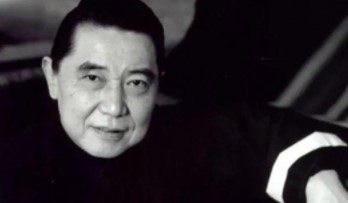
Fou Ts’ong (March10,1934 — December 28,2020) — the “Piano Poet”
Fou Ts’ong was born in Huayuan Xincun, Shanghai on March 10, 1934. His father was a translator Fou Lei. When Fou Ts’ong was three or four years old, he had already shown an extraordinary talent for music. He started to learn piano at the age of seven and a half, and he was taught by Italian conductor and pianist Mario Paci. Mario Paci is Liszt’s reintroduction disciple. Fou Ts’ong has been taught under his sect for three years.
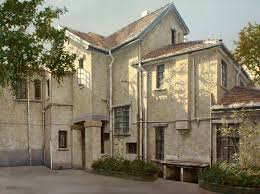
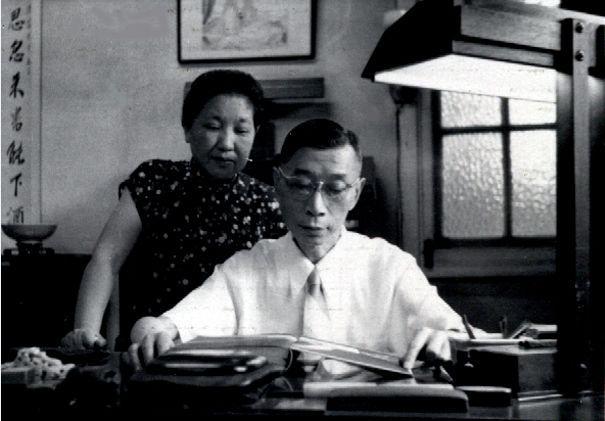
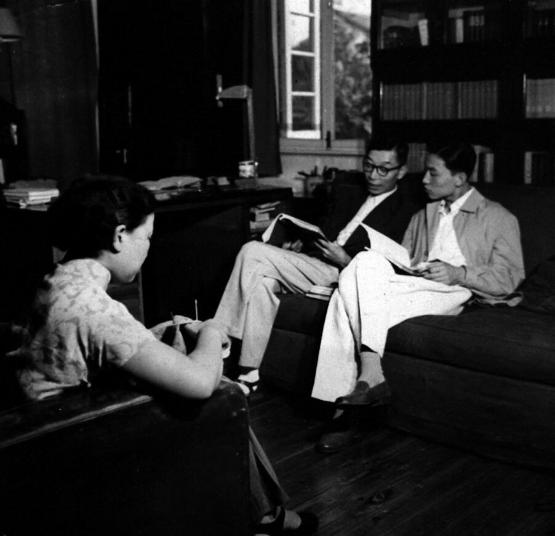
| The Translated works of Fou Lei |
| Fou Lei’s translations are mostly famous works by French writers Balzac and Romain Roland. The 15-volume “Fou Lei Translation Collection”, with a total of more than five million words, is an unprecedented masterpiece in the history of Chinese translation. In addition, Fou Lei is also an outstanding art critic. At the age of 24, he translated the immortal masterpiece “Rodin’s Art Theory”. 26-year-old Fou Lei wrote “Twenty Lectures on World Art Masterpieces” when he lectured at the Shanghai Academy of Fine Arts. The article not only analyzed some paintings and sculptures, but also touched on philosophy, literature, music, socio-economic and historical background, etc. This shows that his knowledge is profound and versatile. |
Fou Ts’ong again became his teacher in 1951, the Soviet pianist Mrs. Bronstein. In February 1952, the 18-year-old Fou Ts’ong performed his first public performance with the Shanghai Symphony Orchestra, which attracted the attention of the domestic music industry. In 1953, Fou Ts’ong was selected to participate in the piano competition of the Fourth World Youth and Students Peace and Friendship Festival in Romania. In July of the same year, Fou Ts’ong went abroad for the first time to compete in Romania and won the third prize. After the competition, Fou Ts’ong visited Germany and Poland with the group and played Chopin’s works in Poland many times, which was recognized by local musicians. In 1955, Fou Ts’ong was invited to participate in the Fifth Chopin International Piano Competition in Warsaw, and finally won the third place and the “Mazurka” Award, becoming the first Chinese musician to win an international piano competition.
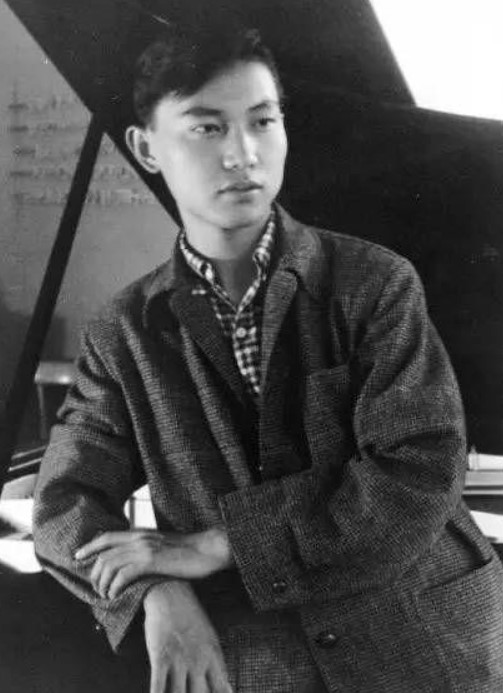
After the Chopin International Piano Competition, Fou Ts’ong stayed in Poland and entered the Warsaw National Conservatory of Music to study piano. During this period, Fou Ts’ong returned to China for vacation from August to October 1956. He held a solo recital in Beijing and cooperated with the Shanghai Symphony Orchestra in Shanghai. He held the Mozart Concerto concert and graduated early at the end of 1958. In December of the same year, Fou Ts’ong left Poland and did not return to mainland China, but moved to London, England. At that time, his father Fu Lei had been designated as a rightist. This was regarded as an act of defecting in mainland China at the time. During the Cultural Revolution, Fou Ts’ong’s parents were forced by the Red Guards to commit suicide at their home in Shanghai. Afterwards, the cemetery was also destroyed by the Red Guards. His father was rehabilitated in 1979, and Fou Ts’ong was rehabilitated in 1981.
Fou Ts’ong married Zamira, the daughter of Jewish British violinist Yehudi Menuhin in 1960, and divorced in 1969. In the two decades of the 1960s and 1970s, Fou Ts’ong held about 2,400 solo concerts; he has collaborated with many famous international performers including Menuhin, Daniel Barenboim, Zheng Jinghe, etc. ; Recorded about 50 records; served as a judge in the Chopin International Piano Competition, the International Music Competition of the Queen Elizabeth of Belgium, and music competitions in Norway, Italy, Switzerland, Portugal, Southeast Asia and other countries and regions; Almost all parts of Europe, America, Middle East, Southeast Asia, Japan, Oceania. In 1979, Fou Ts’ong gave a concert at the Central Conservatory of Music. Since then, he has returned to China to play and lecture almost every year, and has been to Beijing, Shanghai, Xi’an, Chengdu, Kunming and other places. He has lectured on topics such as Chopin, Mozart, Debussy, and performed works by these composers and Schubert and others. He also cooperated with the Central Music Orchestra and played Beethoven’s concerto; with the Central Conservatory of Music’s student band, he played Mozart’s concerto and also served as a conductor; he also specially directed the training of the chamber music group of the Central Conservatory of Music.
On December 27, 2020, Fou Ts’ong was reported by the media to be diagnosed with new coronary pneumonia. On the 28th, Fou Ts’ong died of COVID-19 in London, England.
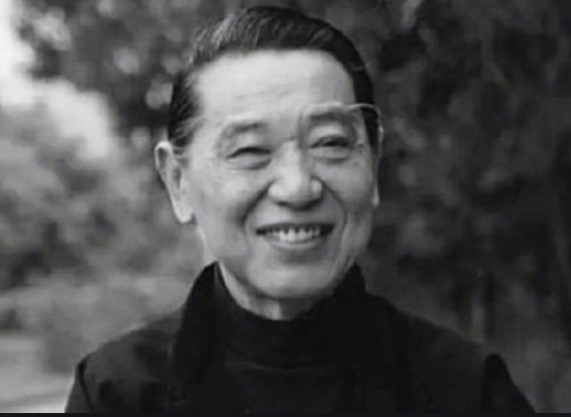
Fou Ts’ong began his career at the same time as China’s infamous Cultural Revolution. Intellectuals was criticized and cracked down for no reason as a Western-style seller. The crackdown was so inhuman that 17 teachers committed suicide at the Shanghai Conservatory. The young Fou Ts’ong, who won a prize at the Chopin Competition and became internationally famous, was also ordered to return to China soon and go to the countryside to learn ideas. Thought learning is, in short, hard work. It’s not the countryside of Japan today. It’s hard to get warm, and it’s the place to live. Of course, if you live like that, your body as a pianist will be destroyed. Naturally, Fou Ts’ong chose asylum. A lot of people who missed his talent cooperated. However, partly because of that, his parents and younger brother in China were severely criticized and terribly humiliated. At last, his parents couldn’t stand the unreasonable humiliation and committed suicide. His younger brother hid his history and found a job, but when he was found to be a relative of the traitor Fou Ts’ong, he was treated with terrible hatred and torture. Although he had a hard time committing suicide, he barely died because of his obsession with surviving anything.
Just as Fou Ts’ong parents and his younger brother suffered all the silent accusations against him during the Cultural Revolution, he only wanted to ask one thing: I love this country, but does this country love me?..
It’s no wonder that Fou Ts’ong’s music has very vivid emotions, you can listen to Chopin, Debussy, Scarlatti, Schumann, etc. played by Fou Ts’ong. It’s really good value. Especially, Chopin’s Piano Concerto No. 2 and 2nd movement are one of the best recordings of him. Extremely strong sorrow, intense impressiveness, rare music would match the word sadness so much. No one else knows a pianist who played Chopin with such urgency. As Fou Ts’ong’s CD, Beethoven’s Piano Concerto No. 4 with a super slow tempo and a super aesthetic world seems to be available on HMV. This is the opposite of Chopin, whose intense emotions overflow like a weir, and is characterized by an extremely romantic dream beauty, which I love.



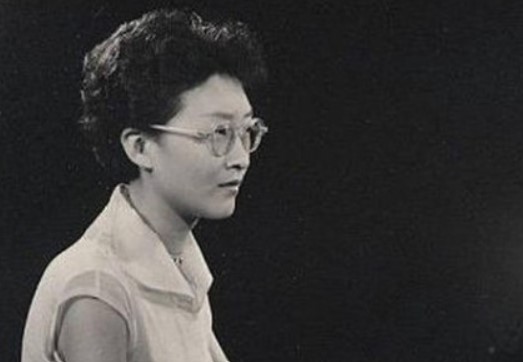
Shengying Gu (July2,1937 — January 31,1967) — the “Piano Poetess”
Shengying Gu was a well-known Chinese pianist. She was born in Shanghai on July 2, 1937. She attended the Western Girls’ High School in 1949 and was admitted to the Shanghai Symphony Orchestra in 1954. She participated in the 6th World Youth Festival Piano Competition in Moscow in 1957 and won gold Quality medal. She and her family suffered cruel persecution during the Cultural Revolution, finally, she committed suicide at the same time as her mother and younger brother on January 31, 1967, at the age of 30.
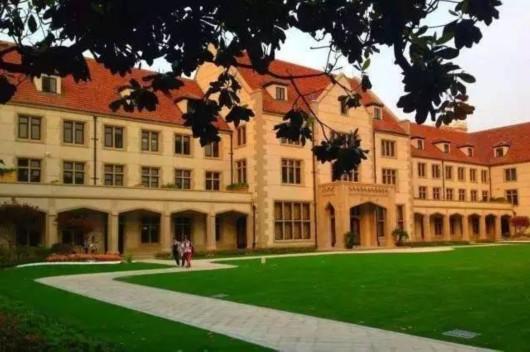
Juvenile Experience
Shengying Gu had a very talent for music since she was a child. She studied piano at the age of 3 and entered the piano department of the Chinese and Western Girls’ High School at the age of 5. When she was 9 years old, she was tutored by Yin Zhen, the director of the piano department of Chinese and Western Primary Schools, and her skills improved greatly. Besides learning piano, she likes calligraphy and painting, and read Chinese and foreign literary masterpieces widely to enrich her piano performance art. In 1949, she studied in the second grade of Chinese and Western Girls’ High School (later Shanghai Third Girl’s High School) and learned piano from Professor Yang Jiaren of Shanghai Conservatory of Music. In May 1953, she was guided by the famous pianist Professor Li Jialu, mastering the performance skills of various European genres and styles, and learned music theory and music history from Professor Ma Rongshun and Shen Zhibai. In the same year, she cooperated with the Shanghai Symphony Orchestra and won her first performance of the Mozart Piano Concerto in D minor. In 1954, she graduated from female high school and was admitted to the Shanghai Symphony Orchestra as a solo performer. The first solo concert was held in Shanghai on February 26, 1955 and was a great success. In 1956, he entered Tianjin Central Conservatory of Music for advanced studies, and then went to Moscow to study.


Youth & Achievements
In the mid-1950s, Shengying’s father as well as patriotic general: Gaodi Gu was implicated in the “Pan Hannian Injustice Case” and sentenced to life imprisonment. In such adversity, Shengying went to Moscow to participate in the sixth World Youth Festival piano competition in 1957 and won the gold medal. In October 1958, she participated in the 14th International Piano Competition in Geneva. She won the highest award with Maurizio Pollini, who would become a world-renowned piano master in the future. In March 1960, she participated in the 6th Chopin Piano Competition in Warsaw and was highly praised. In the same year, she received an honorary diploma from the Central Conservatory of Music. After that, she was named Shanghai Outstanding Youth, March 8th Red Banner Bearer, and Outstanding League Member of the Cultural Bureau for many years. In April 1964, she participated in the Belgian International Piano Competition and won the grand prize again, and later represented China to perform in the Netherlands and Finland.
Her own style is a solemn and refined poetry. This style cannot be cultivated by the Juliat School of Music. In the past, the older generation of masters, such as Russia’s Negots, all had this style. This reminds me of Tsvetayeva’s tearful poems. With the end of a special era.
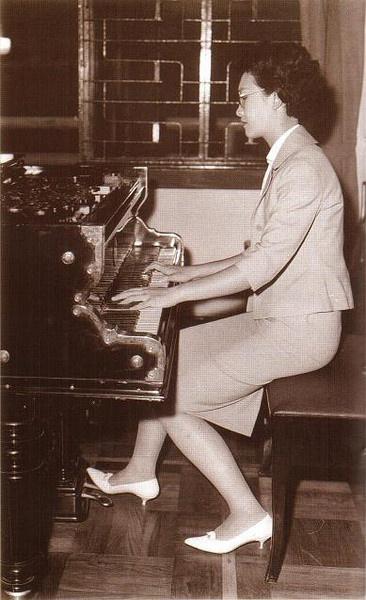
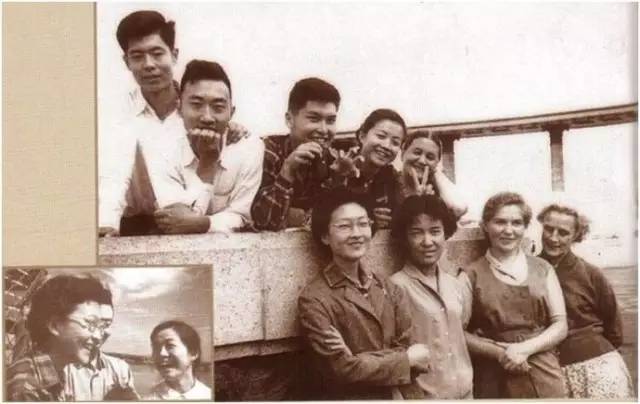
Die with a grievance
Shengying suffered cruel persecution during the Cultural Revolution and died on January 31, 1967 (opening the gas in her home with her mother and younger brother to commit suicide) on January 31, 1967. She was only 30 years old.
Fou Ts’ong and Shengying Gu used to learn piano together, and they knew each other very well. But in 57 years, Fou Lei was labeled as a rightist and purged. Fou Ts’ong clearly saw that China’s situation was not suitable for his artistic development, so he resolutely left. Today we are really grateful for Fu Cong’s choice, otherwise he will be a dead end. Let’s take care of Sheng Ying. She was always close to the organization, actively carrying out ideological reforms, and wanted to follow the mainstream ideology. Before the Cultural Revolution, she also took a very responsible artistic attitude to learn and play piano works adapted from red songs, and even moved the piano to the workshop of Shanghai Heavy Machinery Factory to play piano for workers. Those efforts to reform themselves have not been done at all. But her heart was full of contradictions and pain, and she wandered between Beethoven and Red Song. In the depths of her soul, she loves those great music works, Chopin, Mozart, and Beethoven. But in the ridiculous and crazy world of China, she was afraid of her love and her class position was wrong, not to mention that her father was still in the labor camp, so she couldn’t help but be careful. Many of her friends mentioned the melancholy in her daily life. She lived a heavy life and couldn’t tell. How painful it is for an artist not to dedicate what I love to art! So I listened to Shengying Gu’s recordings and felt that she played Chopin with a special taste, because she unknowingly realized the zal in Chopin’s music. This is a Polish word that means humiliation and pain.
Chopin – Prelude in d minor Op. 28 No. 24
Perfect performance. She was called “Piano Poetess”. I think she well deserved this title.

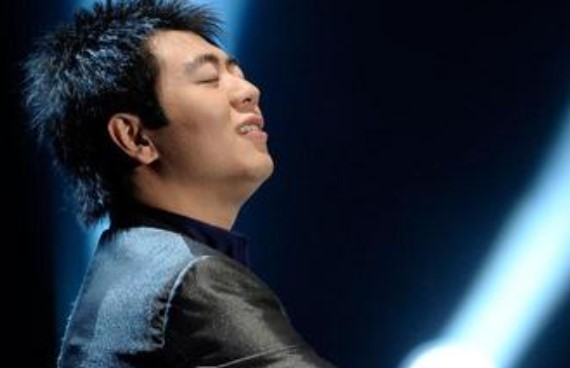
Lang Lang(June14,1982– ) — the “Piano Genius”
Juvenile Experience
Lang Lang was born in a family full of music atmosphere in Shenyang City, Liaoning Province. Under the influence of the family environment, Lang Lang developed a keen interest in music at a very young age. Lang Lang was attracted by “Hungarian Rhapsody No. 2” played by Tom Cat in the cartoon “Cat and Mouse” when Lang Lang was 2 and a half years old, and thus developed a keen interest in the fingers of piano players. The basic melody was played on the domestic upright piano at home, and his father Lang Guoren began piano enlightenment for him. Lang Lang formally studied piano when he was 3 years old. At the age of 5, he participated in the children’s piano competition for the first time in the three provinces of Northeast China and won the first prize. In 1989, Lang Lang, who was only 7 years old, participated in the first Shenyang Children’s Piano Competition and won the first place again. In September 1995, he participated in the second Tchaikovsky International Young Musicians Competition held in Sendai, Japan as a public faction, and won the gold medal. After returning to China, Lang Lang held a solo concert in the Beijing Concert Hall. In 1996, Lang Lang was invited to cooperate with the China National Symphony Orchestra. At the opening concert attended by the then Chinese President Jiang Zemin as a guest, the 14-year-old Lang Lang was appointed as piano soloist. In March 1997, Lang Lang was admitted to the world-renowned Conservatory of Music in Philadelphia, USA with the first place, under the tutelage of Gary Graffman. In the same year, under Graffman’s recommendation, Lang Lang passed the audition and signed a contract with IMG Performance Agency, and since then he has become a professional piano player.
Tiger Father’s Education
Lang Lang is very talented in music, but in order to make Lang Lang progress faster, his father super-strictly supervises Lang Lang to practice piano every day. Lang Lang practiced piano almost all of his childhood and could not play as freely as other children. Lang Lang once revealed that his father was very strict with him. In addition to practicing piano, his father also urged him to learn English. Perhaps it is because of Lang Lang’s unremitting efforts that he has become Lang Lang.
Lang Lang’s mother separated from her husband and son in Shenyang for 8 years, and stayed alone in Shenyang, providing necessary financial support for Lang Lang’s growth, and her husband Lang Guoren wanted to let Lang Lang practice piano without being distracted. , Not even letting mother and child meet, and Lang Guoren’s violence against Lang Lang when he was extremely disappointed and confused. When he lost his temper, he dragged his son to the roof of the apartment on the 11th floor, hysterically took out a bottle of highly potent antibiotics, and forced his son to take it. Lang Lang desperately avoided him, his father Lang Guoren pulled his son and screamed: “Then you will jump off the building! Jump down and die!” Lang Lang’s mother said frankly: “How great is the glory of my son on stage, and how deep is the sadness and emotion in my mother’s heart.”
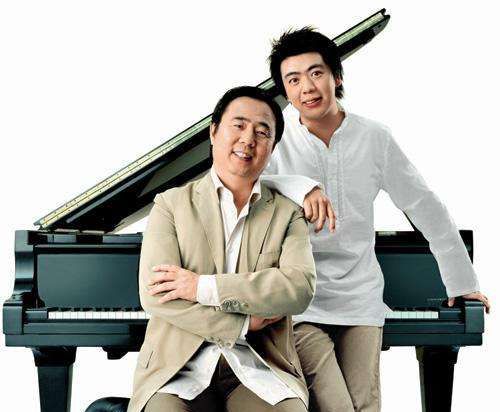
Lang Lang gives impromptu performance for students before Pacific Symphony concert
1. Chopin Etude op25 n11 (part) 2. Rachmaninov Piano Concerto n2 1st; 2nd theme 3. 3. Rachmaninov piano concerto no.3 Intermezzo. Adagio (mv2) 4. Playing with Mozart Turkish March
Amazing performance. It was just something he did for fun. Seriously. He’s just having fun and showing off his technique.