Speaking of the soundtrack master of the Japanese film and television industry, the first reaction of ordinary audiences is estimated to be Joe Hisaishi(the composer master of Ghibli studio). If they learn more, they will be impressed by the classic interpretation of dozens of versions of Sakamoto Ryuichi’s “Merry Christmas Mr. Lawrence”. But in fact, there are a lot of composer talents in Japanese film, documentary, anime, and the entire ACG world of composers, musicians, and instrumental artists. Many soundtracks are familiar. You may not know the name of the music, but after reading this article you will be clear. In this blog, I would like to recommend you 4 best talented anime composers that you should listen to.
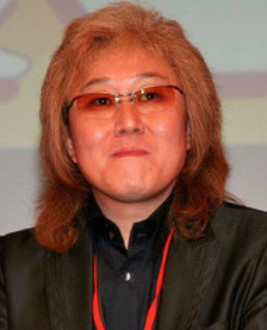

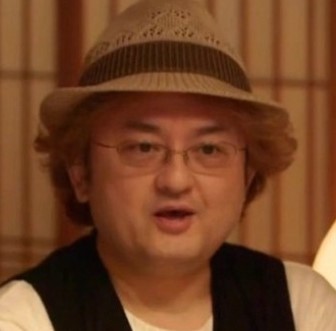
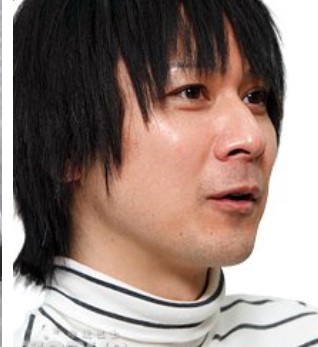
Kenji Kawai
Basic Information
Name: Kenji Kawai
Birthday: April 23, 1957
Born: Shinagawa District, Tokyo, Japan
Profession: Composer, musician
Kenji Kawai once studied in the Department of Atomic Energy Engineering, Faculty of Engineering, Tokai University, Japan, but he dropped out in the middle, and then entered the Shangmi Conservatory of Music, but also dropped out after half a year. Mainly for Japanese animation, movies, TV series, games and other soundtracks. Kenji Kawai has been engaged in the study of Japanese folk music for a long time, so his earlier styles are mostly slow and graceful with a strong oriental classical style.
His music can often be well combined with the anime movies related to robots, giving people a fortitude, courageous spirit and a sense of mission. For instance, like this animation “Patlabor2” ‘s opening theme, it is a long science fiction comic created by Masami Yuki. It tells the story of the fictitious Second Section of Special Vehicles of the Police Department of the Japanese Metropolitan Police Department, which is a police force equipped with robots to complete various tasks. This comic is different from other similar themes in that this comic focuses on people rather than robots.
The music in all kinds of movies and animations is “completed” by the combination of images, music and sound effects, so if the audience only listens to music or only looks at the screen, it will miss the director and the soundtrack who want to express The important part. As a composer of film music, Kenji Kawai’s main job is to compose music according to the director’s performance intentions.
“Patlabor 2″ the movie Opening
I was totally touched and impressed by the electronic music & SF elements of this opening song. This movie tells a very big proposition : War Is Nothing. There is a movie line in it: “Our earth is too small to accommodate a real war.” A sphere with a radius of 6,500 kilometers and 6 billion people live on it. Is their hatred really big enough to make everyone start a war? Actually it is not enough. I discovered the nature of the “proxy” of war. We are fighting for others, not ourselves. The belief in our hearts that we can fight for it turned out to be false. We were manipulated by the governments of major powers, brainwashed by the media, and instigated by arms dealers. We are giving our lives for a nothingness.
“Ghost in shell innocence — Innocence” the movie theme
When I firstly listened to this soundtrack, I felt scary and sad, seems like it came from the hell. The whole story of “Innocence” ostensibly focuses on the robot runaway case caused by the kidnapping incident, and discusses the human rights of robots and the idea of equality of all things. However, the core idea is still to reflect on the existence of human beings. How will we choose while humans and robots are placed on both ends of the scale? I think this soundtrack reflected the philosophical meaning behind the movie.
Among the music of Kenji Kawai, the most distinctive feature is the use of brass instruments to produce a gorgeous theme. For many people who are familiar with Kenji Kawai’s work but are not familiar with the work in front of them, they will be reminded of the distinctive tone when they come into contact with Kenji Kawai’s work, and immediately understand that “this is Kenji Kawai’s song”. In a sense, the characteristics of Kenji Kawai’s works are extremely obvious. Many people say that Kawai’s music has only one mode, but this mode is very scary and profound. This also leads to the fact that Kenji Kawai’s works are more suitable for adding music to images than original works. To me, the reason I love Kenji Kawai’s soundtrack is probably because it brought a sort of warmth of humanity and hope to me, such as the original soundtrack below.
“Eden of the East ” Movie OST – #04 Bojou
Akino Arai
Basic Information
Name: Akino Arai
Birthday: August 21, 1959
Born: Tokyo, Japan
Profession: Composer, musician
At the age of 8, Akino began writing songs in the form of diaries. When she was 19, she went to Fukuoka and specialized in oil painting at a university, where she was also passionate about music, and her music activities were well received in her second year of college. In her second year of college, her friend gave her music demo to the director, who didn’t expect to be invited and asked her to go to Tokyo to develop. But the new home did not want to leave Fukuoka, so distressed. At this point, the mother’s sentence is, “For you who have never done anything consistently, it’s just singing. ” Akino was determined to return to Tokyo to develop his career. She was involved in radio, CM and other activities, and became a member of the choir.
The theme song of the “Record of Lodoss War” is the song of her time in Fukuoka. From 1985 to 2001, Akino was a musician, soundtrackist, singer (CM, animated song) and other areas of active for more than 10 years, and she’s got pretty high ratings in the industry, and she’s worked with masters like Yoko Kanno.
Record of Lodoss War 1: The Grey Witch (Rōdosutō Senki Haiiro no Majo) TV series Opening (April 1988)
“Adesso e Fortuna” had become a classical fair-sounding opening theme since after this animation TV series launched in Japan as well as China. The first time I heard this song was around 90′, I could not express how deeply my heart was touched by this ethereal rhythm, it brought me into a fairyland, a surreal world that I’d like to escape into.
Natsukashii mirai –“Sky Lounge”
Natsukashii Mirai (懐かしい未来) is Akino Arai’s first release. This album is known by few people. I love the piano prelude of this song, it was full of nostalgic feelings.
Toshio Masuda
Masuda listened to African folk music at a young age and became interested in music. Due to the influence of his father as a musician, he began to dabble in various categories such as jazz, classical and pop songs, and then listened to a wider range of music. When he was in middle school, he heard the sound of an electronic synthesizer for the first time and was attracted by its charm. He made a multi-recorded tape by myself and started music creation as an amateur. Later, he self studied piano and drums, and worked as a keyboard player during college. At the same time he graduated and then began his formal professional creation.
Masuda Toshiro is a typical musician who does more than talk. Today, he works as a composer at POWERBOX in Shibuya-ku, Tokyo. The seemingly obscure newcomer looks like “The Secret of Jubei Yanagyu’s Love Eyeband”, “Blue Out of Blue”, “Mushishi”, “Naruto”, “Fantasy” The soundtrack of “Noble Son”, “Vitality Girl Fate with God”, etc. In addition, there are commercials, stage plays, movies, Japanese dramas, games, drama character songs and music related to the library.
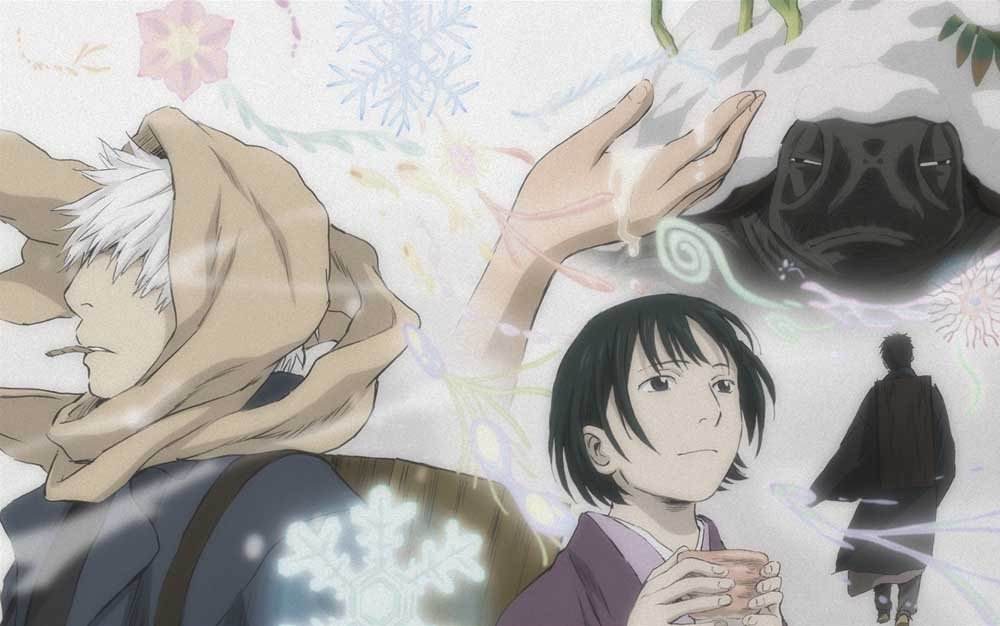
Masuda Toshio’s most famous work is regarded as the original soundtrack of animation “Mushishi“.
| Mushishi (Japanese: 蟲師) is a Japanese manga series written and illustrated by Yuki Urushibara. It was serialized in Afternoon Season Zōkan from 1999 to 2002, and in Monthly Afternoon from December 2002 to August 2008. The individual chapters were collected and released into ten volumes by Kodansha. Those volumes were localized to North America by Del Rey between January 2007 and August 2010. The series follows Ginko, a man who dedicates himself to keeping people protected from supernatural creatures called Mushi. |
Mushishi’s soundtrack style is very consistent with the artistic conception of the animation itself. When I first saw Mushishi, I didn’t understand it. Therefore, it is difficult to find a common theme for individual stories. However, if you watch a few more episodes, you will find that the emotions expressed in each episode are different, which is very consistent when viewed as a fable. And by looking at the building next door, you can know that Mushishi has a certain philosophical or Buddhist meaning. Then, in this way, Masuda’s music can highlight this theme even more. The level is thin, but the melody is far-reaching, and most of the instruments appearing in the music are traditional percussion or wind instruments. This adds a sense of tranquility to the beautiful artistic conception of the work itself. The background of the animation itself, that is, the ancient Japanese villages, can also be well brought out by this style of music.
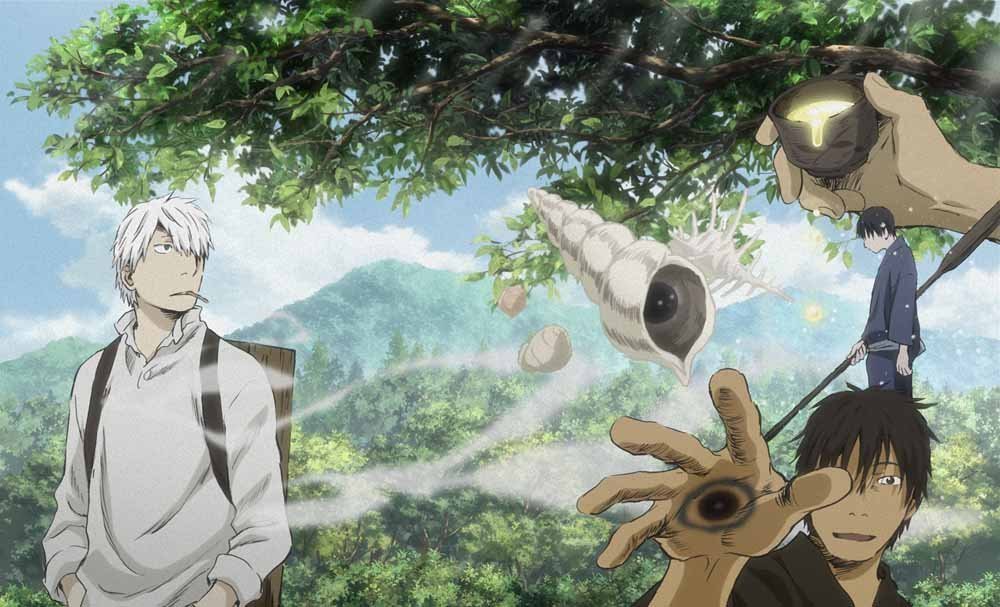
Mushishi OST : Bell drop (鈴の雫)
One of my favourite song in Mushishi. It feels like listening to Zen (Buddhism) at a raining day. A lots of instruments like bell, chime, drumbeat are perfectly mixed in this soundtrack.
Mushishi Zoku Shou OST – Hideru Ame – Cloudless Rain (日照る雨)
This is another mesmerizing and beautifully haunting song.
Yasunori Mitsuda
Yasunori Mitsuda can be defined as the strongest game music producer in Japan. First of all, please listen to the following works of this composer.
“Chrono Trigger – Corridors of Time” from 18:32′
“One Last You”(Ending Theme) – Xenoblade Chronicles 2 OST
Basic Information
Name: Yasunori Mitsuda
Birthday: 21 January, 1972
Born: Tokuyama City, Yamaguchi Prefecture, Japan
Profession: Composer, musician
Yasunori Mitsuda is one of Japan’s strongest game music producer. The struggle of Mitsuda belongs to the legend of “1%genius + 99%hard work”. It took only four years for him from devoting himself to music to thrilling the world. He studied hard for two years (1990-1992) at a certain music college in Tokyo & one-year part-time internship , then worked at SQUARE as a sound designer for a year(1992-1993) , after that he broke out in 1994-1995, his work “THE BRINK OF TIME ” was a blockbuster which made him stand on the summit that ordinary people unable to reach out. His compositions include classical style, dark style, Celtic style, cheerful, lyrical, melancholic, funny, etc. There are all kinds of tunes, and each album he made has several unforgettable songs.
His works have a strong Gultic style. Unlike another famous Japanese anime composer Nobuo Uematsu’s “Grand World” view, Katsunori Mitsuta is better at portraying the core of exoticism with music such as “Another Termina” and “The Deeam Start” in Crono Cross and “Arranged by Album Creid” of Xenogears. Yasunori Mitsuda’s music style is difficult to rule, because he can find creative inspiration from the established world view of the game to determine the style of the song and match the details. He can often hear the styles of Baroque, Flamenco, Scandi, and Gult. “Chronomantic” in Crono cross has a Caribbean style, and album “The Brink of Time” was performed by a jazz band named “Guido”. Mitsuda is good at innovation and does not like restraint, and has a high degree of freedom in creation. From nursery rhyme-style Haka no Niwa to jazz Moonlit shadow, he reflects his unruly talent.
Yasunori Mitsuda’s representative video game compositions:
- Chrono Trigger (1995)
- Radical Dreamers (1996)
- Front Mission: Gun Hazard (1996)
- Tobal No. 1 (1996)
- Xenogears (1998)
- Mario Party (1998)
- Chrono Cross (1999)
For more details of his biography, you could refer to following excerpt from wikipedia.